
My visit to the Wine Museum in Tbilisi, Georgia, gave me great insight into the country’s winemaking tradition as the homeland of wine. I learned fascinating facts about wine, and as a wine lover, I’m excited to share them.
The building was originally a three-story caravanserai in the 17th century. Merchants stopped there to trade on the first floor, while the second and third floors served as overnight accommodations.
Today the building houses the Wine Museum, which features replicas of ancient pieces related to Georgia’s winemaking traditions.
Here’s a taste of what I learned about the world’s oldest winemaking tradition.

The World’s Oldest Winemaking Discovery
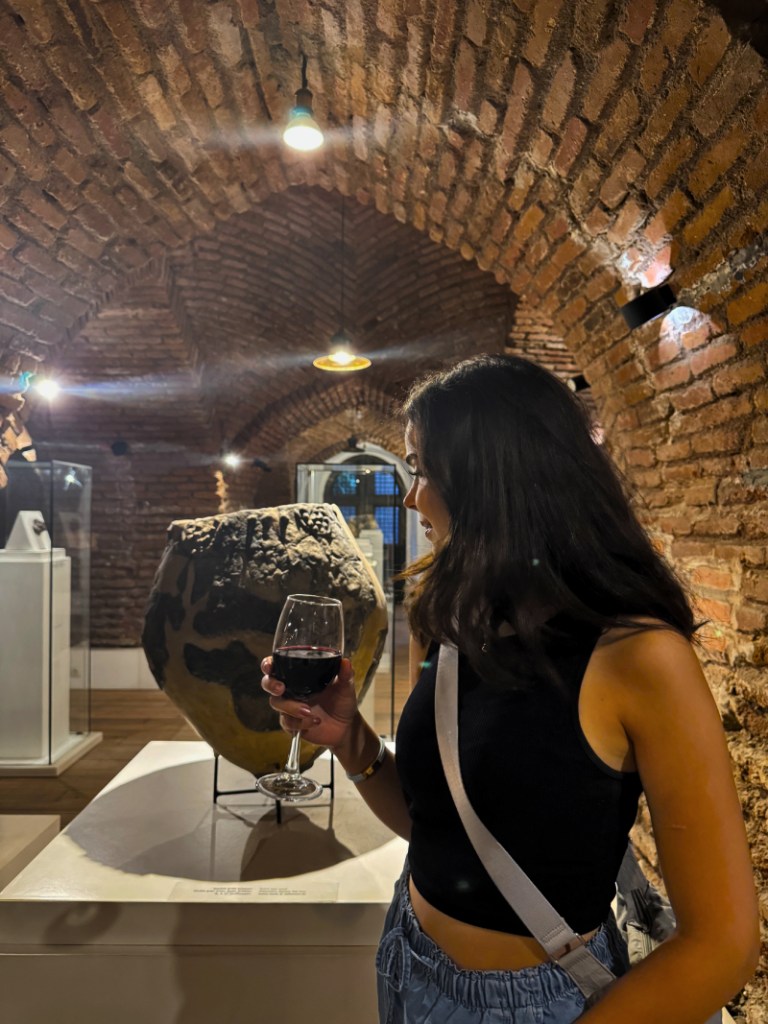
A clay vessel dating to the sixth millennium B.C. was discovered in Kvemo Kartli, near Didi Gora. Inside the vessel, archaeologists found grape seeds, but seeds alone do not prove winemaking. Scientists also detected tartaric acid and wine residue, confirming that the vessel was used for wine production.
The artifact was later sent to the United States for analysis, which confirmed it was about 8,000 years old. This discovery shows that Georgia has the world’s oldest winemaking tradition, predating similar evidence in Iran from the fifth millennium B.C.
Subscribe because some of us still enjoy reading,
even when the world prefers short-form content.
Wine and Rituals in Georgian Culture
There is no Georgian feast without wine, and the toastmaster, known as the Tamada, plays a central role. The word “Tamada” comes from two words meaning “head” and “table.” The Tamada is the head of the table and leads all the toasts during the feast. He holds a horn, which is typically introduced in the middle of the celebration. If you look at the sculpture, you’ll notice he is sitting. This reflects the tradition of sitting while drinking. It also made practical sense: when the horn is passed around, you might feel dizzy, so sitting reduces the risk of falling.
The sculpture in the museum is a replica. The original is preserved at the National Museum of Georgia.

Another fascinating item is the Colchian drinking cup, which has no bottom. This design forces the drinker to finish the wine in one go, highlighting a tradition that emphasizes celebration and commitment.

Georgia is also home to the massive statue of the Mother of Georgia. In one hand, she holds a phiale filled with wine for friends; in the other, a sword for enemies. This symbolism reflects Georgia’s hospitality and readiness to defend.
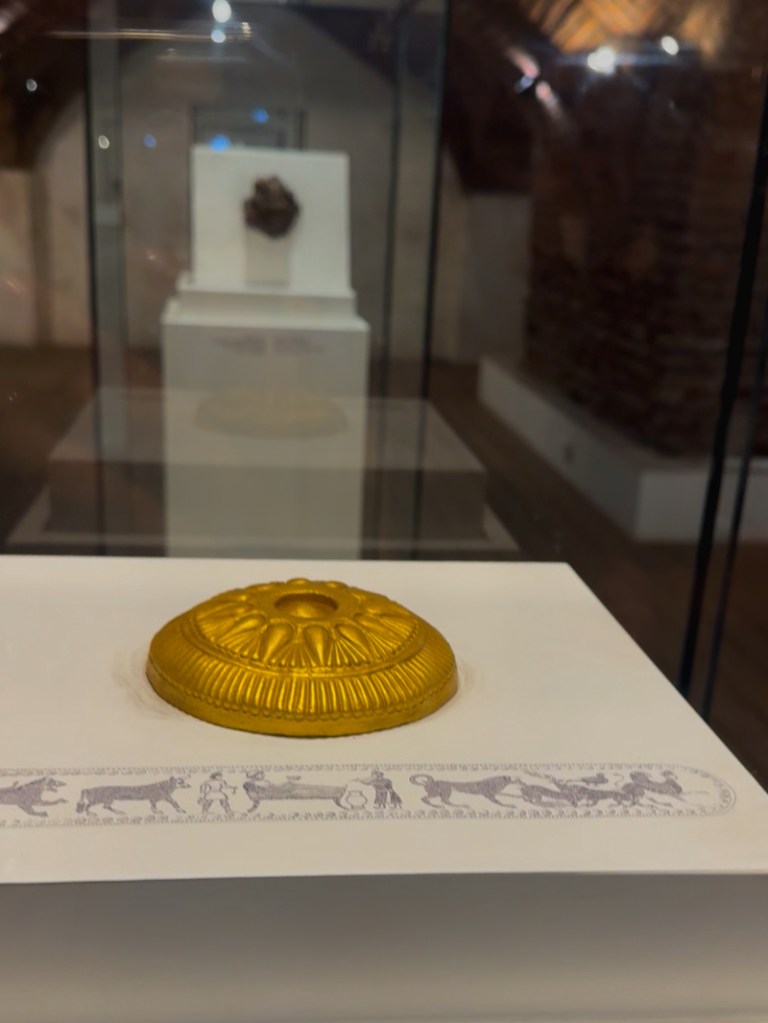
The museum has an upside-down phiale dating to the fourth century B.C. in Persia but found in Georgia. Its unique shape adds to the fascinating story of wine culture in the region.

The museum also displays a communicating vessel, used solely for smelling wine. To use it, you pour the wine, gently shake it and then inhale the aroma.
The Art of Winemaking in Qvevri
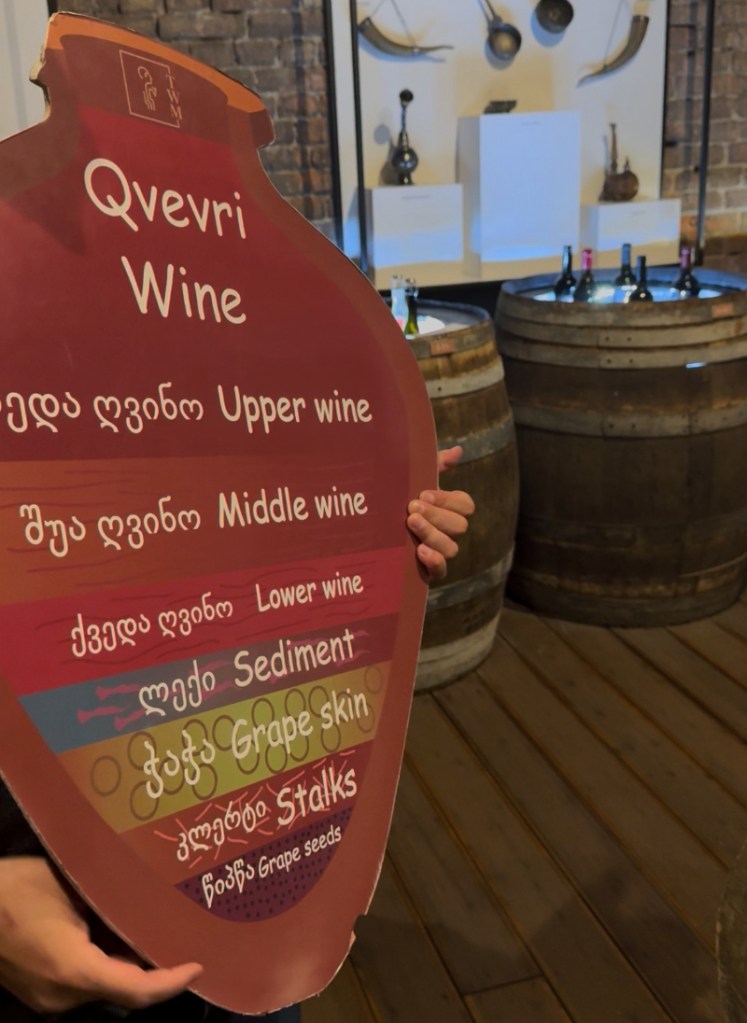
In Georgian winemaking, the process inside a qvevri begins with layers. At the bottom go the grape seeds, followed by the stalks, then the grape skins, and finally the juice that becomes wine. During the first 10 days, the mixture must be stirred at least twice a day; otherwise it turns into vinegar.
The fermentation time depends on the type of wine. Red wine usually takes one to one and a half months, while white wine requires three to six months
After this period, the qvevri holds three layers of wine. The lower layer, close to the skins, is drier. The upper layer, exposed to air, is lighter. The middle layer is considered the finest because it is untouched by either the bottom or the surface.
Tasting and Aging the Georgian Way
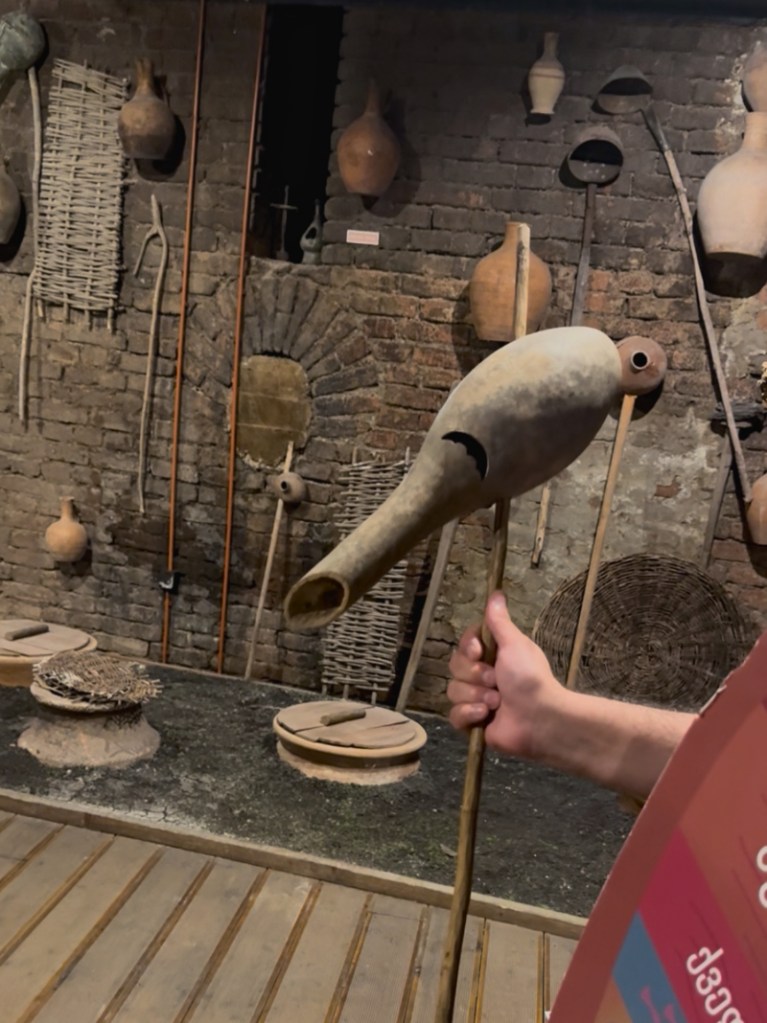
For tasting wine directly from the qvevri, Georgians traditionally used dried pumpkins. The reason was practical: if a pumpkin accidentally fell inside, it would float instead of sinking and therefore would not spoil the wine.
After the wine is removed from the qvevri, each layer is transferred into separate qvevris for the aging process.
When Wine Turns Blue and Green
There is something almost magical about the color-changing power of Saperavi, a grape native to Georgia. When Saperavi skins are added to European white wine, the color shifts to blue and the taste changes from dry to sweet. The pigment in the skin creates this natural transformation.
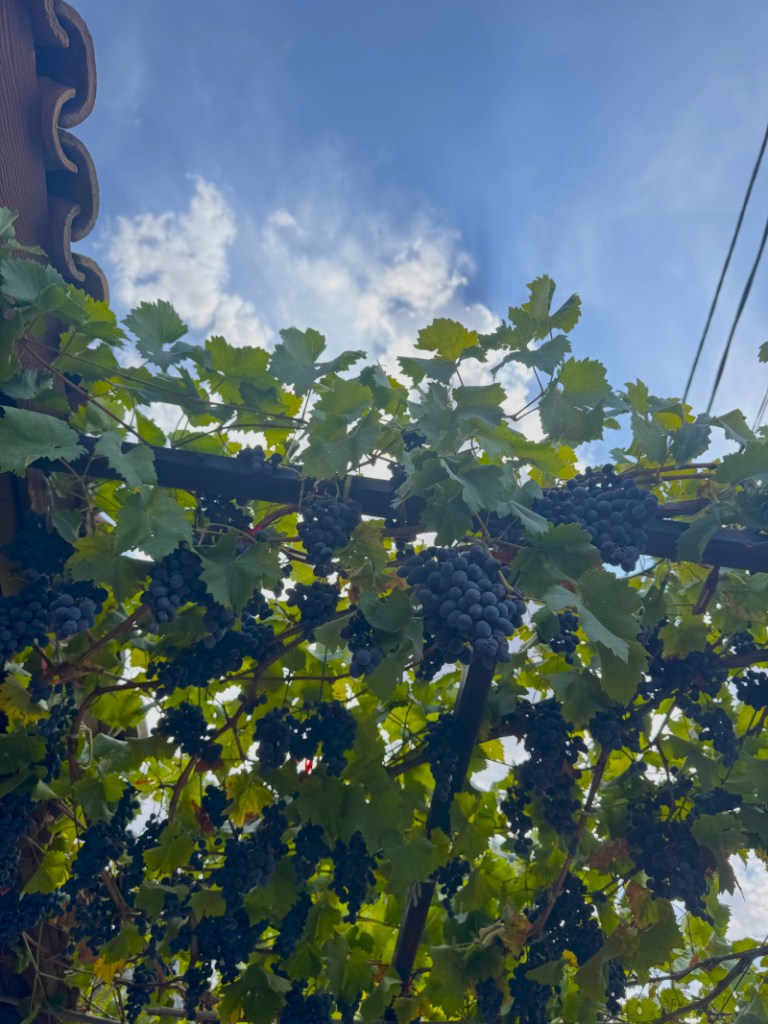
When Saperavi skins are added to amber wine, which normally has a yellow hue, the color turns green and the flavor becomes semi-sweet.
Serving temperature also plays an important role. Color-changed wine is best enjoyed at 5 to 7 degrees Celsius, red wine at 16 to 18 degrees, and white wine at 11 to 13 degrees.
Before barrels were introduced, leather was used to transport wine over long distances. Clay vessels were too heavy and easily broken.

Unique Traditions and Surprising Facts
- The horns used for drinking are made from actual wild goat horns.
- With the leftover grape skins, Georgians make a traditional spirit called Chacha, often described as Georgian vodka. The process uses a copper distiller. The grape skins are heated, and as the vapor rises, it passes through a cooled tube. The condensed liquid becomes Chacha.

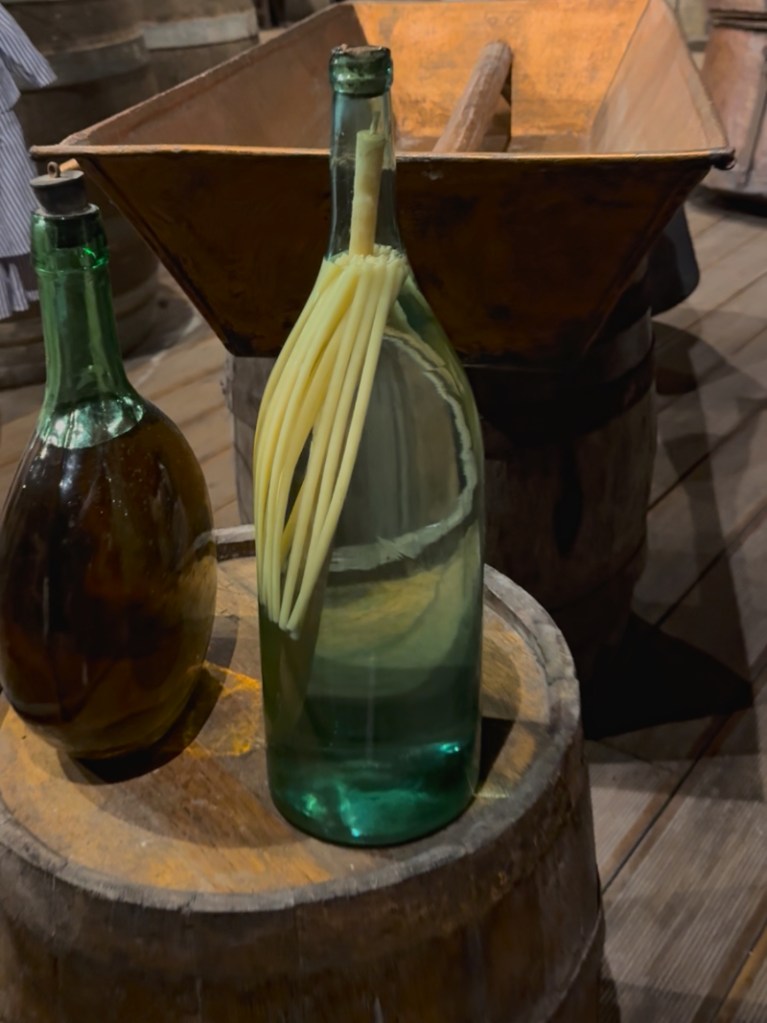
- For flavor, honey beeswax candles are sometimes placed in the storage jar.
- Making brandy requires actual wine, and it takes about 8 liters of wine to produce just 1 liter of brandy.
A Taste of Georgian Wine History
Visiting the museum was an incredible way to explore the world of winemaking in the country with the oldest wine history. Sipping a glass of Georgian wine while hearing Andria, the museum guide, explain every detail made the experience even more special.
One of the best parts of traveling is discovering a country’s history and traditions up close, and this visit delivered exactly that.
I hope you found this interesting! Have you ever tried Georgian wine? I’d love to hear your thoughts.


Leave a comment