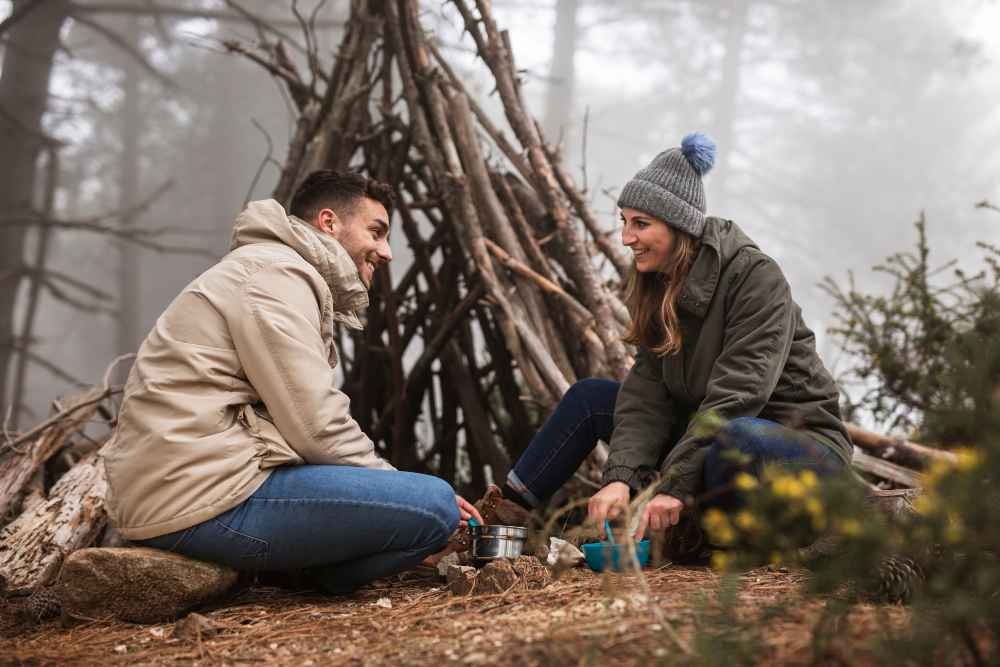
Have you ever thought about what the lives of primitives looked like before having easy access to safe homes and delicious foods? Homes were just some basic shelters made from natural materials, and food came directly from nature,vegetables and meats from hunting! No fancy equipment, just some handmade tools to make shelters and go hunting.
That’s pretty cool to imagine until you learn that some adventurous people imitate primitive life pretty much the way it was a thousand years ago! Yes, some people put those outdated skills and equipment into practice and survive in the wild! This is called bushcraft!
I spent hours and searched to find out more about the skills bushcrafters use to survive and imitate those lives of primitives. I’ve never spent the night out in the wild, but I do love hiking and being out in nature.
What Equipment Do Bushcrafters Need in the Wild?
To have a primitive-like wild camp, you don’t need sophisticated tools—just a few pieces to make a man-made shelter and probably some tools for hunting food. However, it’s also common to take canned food! But some bushcrafters want to dive deep into the wild and experience every skill for survival — including sourcing food themselves. As a nature lover, I prefer protecting nature and wildlife, so hunting is a red flag for me.
Common tools are:
- Bushcraft knife
- Axe
- Saw
- Sickle
How Do Bushcrafters Make a Shelter?
The most interesting part of bushcraft is making shelters from scratch to spend a night in. There are several natural resources to use in the middle of nowhere, and most bushcrafters experience this solo—it might be scary but a lot more adventurous!
There are several ways and materials to build a man-made shelter, and I’m going to share some common and awe-inspiring ones!
I highly suggest watching the YouTube video to have some insights on bushcraft-style shelters.
Wooden Shelters
Camping in the wild means using various natural sources to make a shelter. It is also important to preserve wildlife and nature, so cutting living trees for shelter is not an environmentally friendly act. There are dead trees around to collect and make use of, and build a small closed place to spend the night.
- Tree branches – for creating a basic and strong frame of your shelter.
- Logs – Short, thick pieces of wood that can be stacked to build walls.
- Sticks – Thinner than branches, but super useful for support or for tying parts together.
- Leaves – You can pile them up to cover the roof or use them as insulation to keep warm.
- Pine needles – These work well as natural flooring or to help keep heat in.
- Moss – Soft and spongy. Perfect for plugging gaps or even making your sleeping spot a little more comfortable.
- Tall grass – Can be woven into mats or bundled to cover the roof.
- Tree bark – Acts like natural shingles. You can layer it on walls or even shape it into simple tools.
- Rocks – Heavy enough to keep things in place. Also handy for building a fire base or windbreak.
- Vines or natural rope – Nature’s version of string. Good for tying branches together.
- Mud or clay – Useful for sealing cracks or building thick, protective walls.
- Snow – If it’s deep enough, it can be shaped into wind-blocking walls or even small igloos.
Building an Igloo with Just Snow
I watched a few videos on how people build igloos, and it’s honestly fascinating. They start by shaping big rectangular blocks out of packed snow. To make them fit well together, they use something sharp—usually a saw—to smooth the sides. It kind of reminded me of cutting bricks for a wall.
Then comes the part that really stood out: they use loose snow like it’s cement. They press it between the blocks to seal the gaps and hold everything in place. Simple but smart.
For the roof, you can’t just stack the blocks straight. You have to place them in a spiral, like a snail’s shell. It’s not easy, especially if the snow is too soft—it just won’t hold.
Cave Shelters
Hiking in the wild, you’ll likely find some caves and large rock cliffs with the potential to serve as shelter. Some hikers make it feel more like a closed and cozy shelter with dead trees, moss, or any other natural material; others just make a fire and spend the night in the cave. My opinion? It’s handy, cool, and primitive, but I personally wouldn’t take the risk if I am not familiar with the territory, because I don’t want to be an unexpected guest for a leopard!
More Than Survival: It’s About Respect
Bushcraft is more than just making man-made shelters with basic tools; it’s a way of connecting with the land, reading its signs, and adapting to what it offers. Most bushcrafters spend days or even weeks in the heart of the wilderness because they’re seeking self-reliance, simplicity, and a deeper connection to nature. Living in nature is an awesome experience, but I am not sure how many of them respect nature and the wilderness. I hope they take food with them and do not go hunting. At the end of the day, it’s an animal’s habitat, and we shouldn’t invade their natural life.
What do you think of bushcraft? Share your thoughts and let me know if it’s something you’d like to try.


Leave a reply to Simon Cancel reply